
EN


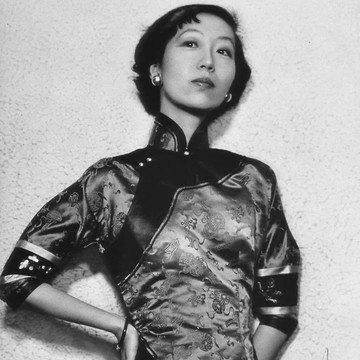
Author of «Love in a Fallen City»
Years of life 1920–1995.
An outstanding Chinese female writer of the 20th century, Eileen Chang was a master of short fiction, as well as a screenwriter, literary critic, and translator. Together with Liu Bichen, Shi Pingmei, and Xiao Hong, she is regarded as one of the four most talented women of the Republic of China.
Born in Shanghai, she grew up in a family of the old aristocracy and developed a passion for literature from an early age. She began publishing her first works as a teenager and gained widespread recognition in the early 1940s with such works as «The Golden Cangue», «Blockade», «Love in a Fallen City», and others. For nearly a decade, Eileen Chang reigned as a celebrated literary figure in the cultural circles of Shanghai and Hong Kong. However, she was not destined to bask in the glow of fame for long. In 1952, Eileen Chang moved to Hong Kong, and in 1955 she left for the United States. On mainland China, she was soon forgotten, as her work was fundamentally at odds with the ideological principles and objectives of the newly established People’s Republic of China.
During this period, she wrote in both Chinese and English and worked on translations and screenplays. Her work gradually gained recognition in Taiwan and Hong Kong and, from the 1980s onward, in mainland China. Her novel «Lust, Caution» was adapted for the screen in 2007 by Oscar-winning Taiwanese director Ang Lee. The film won the Golden Lion at the Venice Film Festival, as well as dozens of other awards.
The writer died in Los Angeles in 1995, leaving behind one of the most significant literary legacies of Chinese modernism. In her fiction, Eileen Chang focused primarily on the private lives of individuals — love, marriage, family relationships, loneliness, and women's lives. Her characters inhabit a world where traditional values collide with the modernization of Chinese society, while her subtle psychological insight and distinctive writing style set her work apart from the literature of her time.
Photo credit by Roland Soong & Elaine Soong.