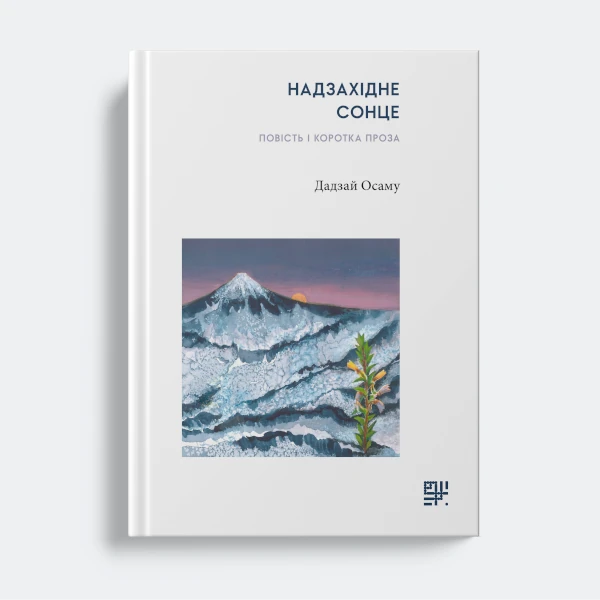
The collection opens with the novel The Setting Sun (1947), which holds a central place in the writer's oeuvre. Against the backdrop of the decline of an aristocratic family and the fading traditions of refined Japan, it tells the story of the struggles of a member of the metropolitan bohemia of the postwar period—a decadent and a rebel who, in truth, longs for love and inner peace.
The collection also includes short prose from different periods of the writer’s career, namely: his debut short story The Train (1933), the autobiographical essay One Hundred Views of Mount Fuji (1938), the short story Fireworks (1942), and his final work, Cherries (1948). In these texts, diverse in genre and themes, an incurable romantic and skeptic, a seeker of truth and a disillusioned heretic pieces together episodes of his life into unpretentious «everyday» narratives, desperately trying to align himself with the rhythm of contemporary Japanese society and grasp its values. Focused on the author’s inner world, his prose is rich in (self-)observations and strikingly candid, profound, and at times ironic reflections on empathy, trust, sincerity, loneliness, submission to fate, and acceptance.
AuthorDazai Osamu
TranslatorYuliia Osadcha Ferreira
Original languageJapanese
ISBN978-617-8376-18-5
Extent208
Format175х240 mm
CoverHardcover
Артем18.03.2026
Чудова книга, вичерпна оповідь про письменника, цікаві твори. "Надзахідне сонце" мені проримувалося з "Ловцем у житі", є між ними щось спільне.
Юлія Осадча Феррейра23.11.2025
Світлано, дякую Вам за відгук!
Думаю, якби Дадзай прочитав його, то посміхнувся б і був би страшенно задоволений, бо він обрав саме такий стиль - за що був добряче розкритикований ще своїми колегами по цеху - для показу невідповідності культури благородної знаті тогочасному японському суспільству. Звісно, в японській мові інші форми висловлення ввічливості, але я свідомо обрала маркерами стилю аристократів слова "паньматка", "панотець", "дядьо" і звернення до старших близьких членів родини на "ви". Усе, що ми зараз сприймаємо як мовні архаїзми, було однією з ознак давньої і вишуканої японської аристократичної культури, яка у повоєнні роки відходила разом із її носіями. Гадаю, показати затухання цієї культури було головною метою автора. Звідси й назва повісті.
В українському суспільстві, до речі, це застаріле звернення до старших у родині на "ви" і множина також відходять у минуле.
Ну, й звісно, світова класика майорить множиною і зверненням на "ви" в аристократичних колах.
Дякую за порівняння мене з ШІ. Я приймаю його як комплімент. :)
Read all
Світлана Сойма22.11.2025
Дякую за пояснення! Для мене це було не звично, та й справді не зрозуміло. Тепер буду знати, вибачаюсь!😅
Видавництво САФРАН22.11.2025
Вітання, Світлано! Це спосіб відобразити архаїчну аристократичну мову.
Як правило, аристократи зверталися одне до одного на Ви.
Світлана Сойма21.11.2025
Відчуття, ніби текст перекладав ШІ🙁 Не зрозуміла, чому "Паньматка" відображається у множині.."Сказали паньматка", "Вони сказали", "Піду приляжу, — сказали паньматка" і тп. Можливо, я чогось не розумію, але це читати дуже не зручно, та й не зрозуміло.
Read all
top seller
The Setting Sun. Novel and short prose
Dazai Osamu
The first Ukrainian translation of the works of one of the most striking representatives of 20th-century Japanese ego-literature and a classic of modern Japanese literature, Dazai Osamu.
420 ₴
Paper book
180 ₴
E-book
EPUBMOBIPDF
EPUB - Suitable for iBooks (iPhone, iPad, iMac)
MOBI - Suitable for ebooks Amazon Kindle
PDF - Opens in Adobe Reader or browser
Our website uses Cookie to improve the user experience. By continuing to use this website, you accept our terms set out in Cookie Policy.